
Photo: Pudelek, CC BY-SA 4.0, Wikimedia Commons

- On foot
- every stop is a 6-18 minute walk from the building
- Monday
- most museums and the Cella Septichora are closed: don't plan your museum day for a Monday
- Tickets
- on each venue's official website, links below
The centre of Pécs is small and compact: most of the sights are within a quarter of an hour of the building, so two days is plenty to see them at an easy pace. One thing to watch out for: on Mondays the Janus Pannonius Museum venues, the Cella Septichora and the Mosque of Pasha Yakovali Hassan are closed. The Bazilika (the cathedral) and the mosque in the town centre are open on Mondays too.
Day one: the old town and the Roman era
Breakfast on our ground floor
Start the day at Reggeli, the breakfast restaurant one floor down. From there you walk straight along Király utca to the main square.
Széchenyi tér and the mosque 6 min
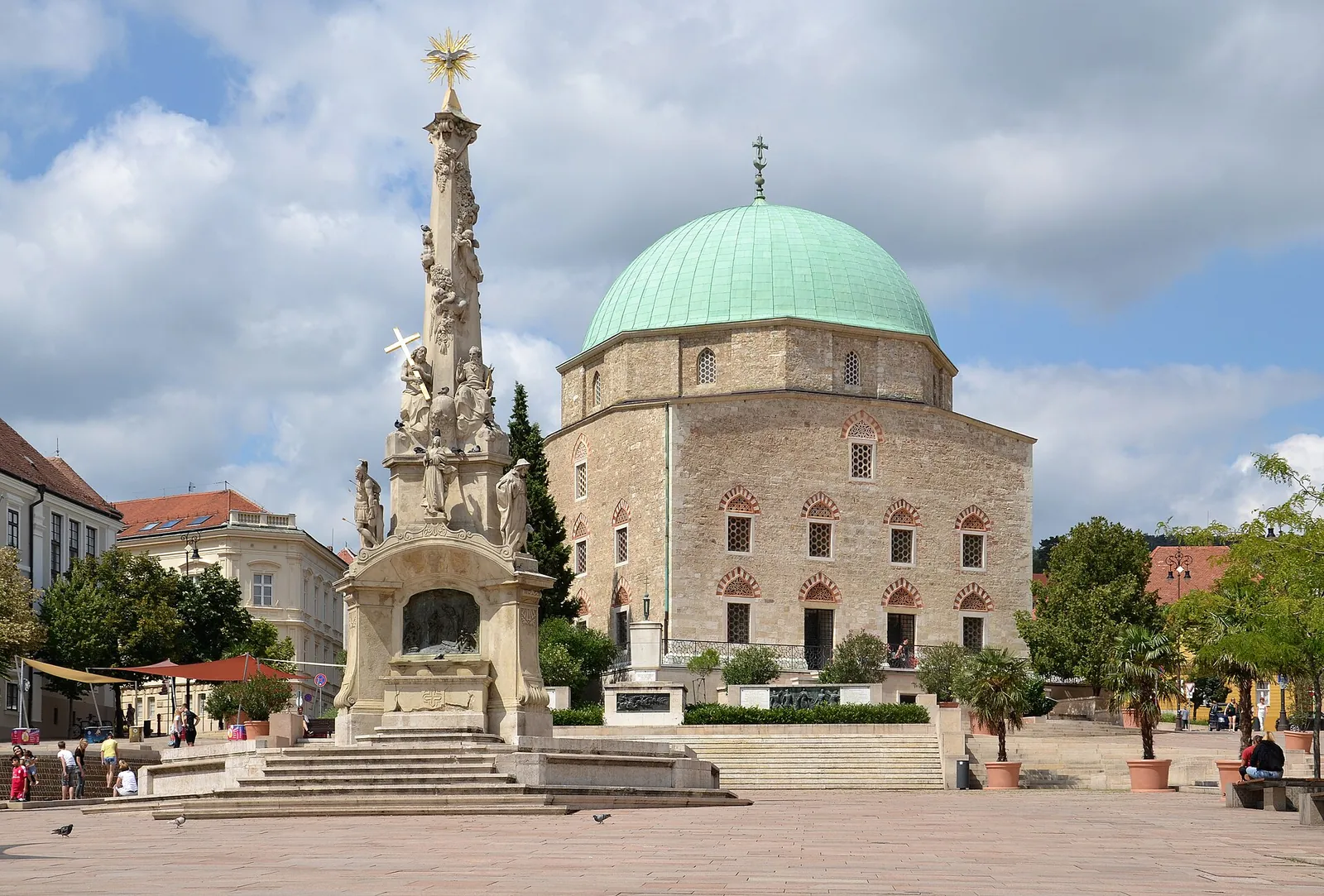
In the Middle Ages this was the town's market square; today twelve streets lead into it, Király utca among them. At the top of the square stands the former mosque of Pasha Gazi Kasim, now the Candlemas Church (Gyertyaszentelő Boldogasszony-templom). According to its operator, it is the largest intact Ottoman-era monument in the Carpathian Basin. Inside you can still see the prayer niche, calligraphic lines from the Quran and the pools of the pasha's former bath. The building sits at an angle on the square because it was aligned towards Mecca.
At the bottom of the square is the Zsolnay Fountain: four metres high, made of eosin-glazed pyrogranite. In the colder months it is covered with wooden boarding to protect it from frost, so you won't see it then.
Káptalan utca 8 min
The street of museums. The Zsolnay Museum is in the oldest known house in the city and shows Vilmos Zsolnay's inventions, eosin among them. Next door is the Vasarely Museum: Victor Vasarely, the pioneer of op art, was born in Pécs in 1906. The exhibition was renewed in 2026.
Dóm tér and the Bazilika 10-11 min
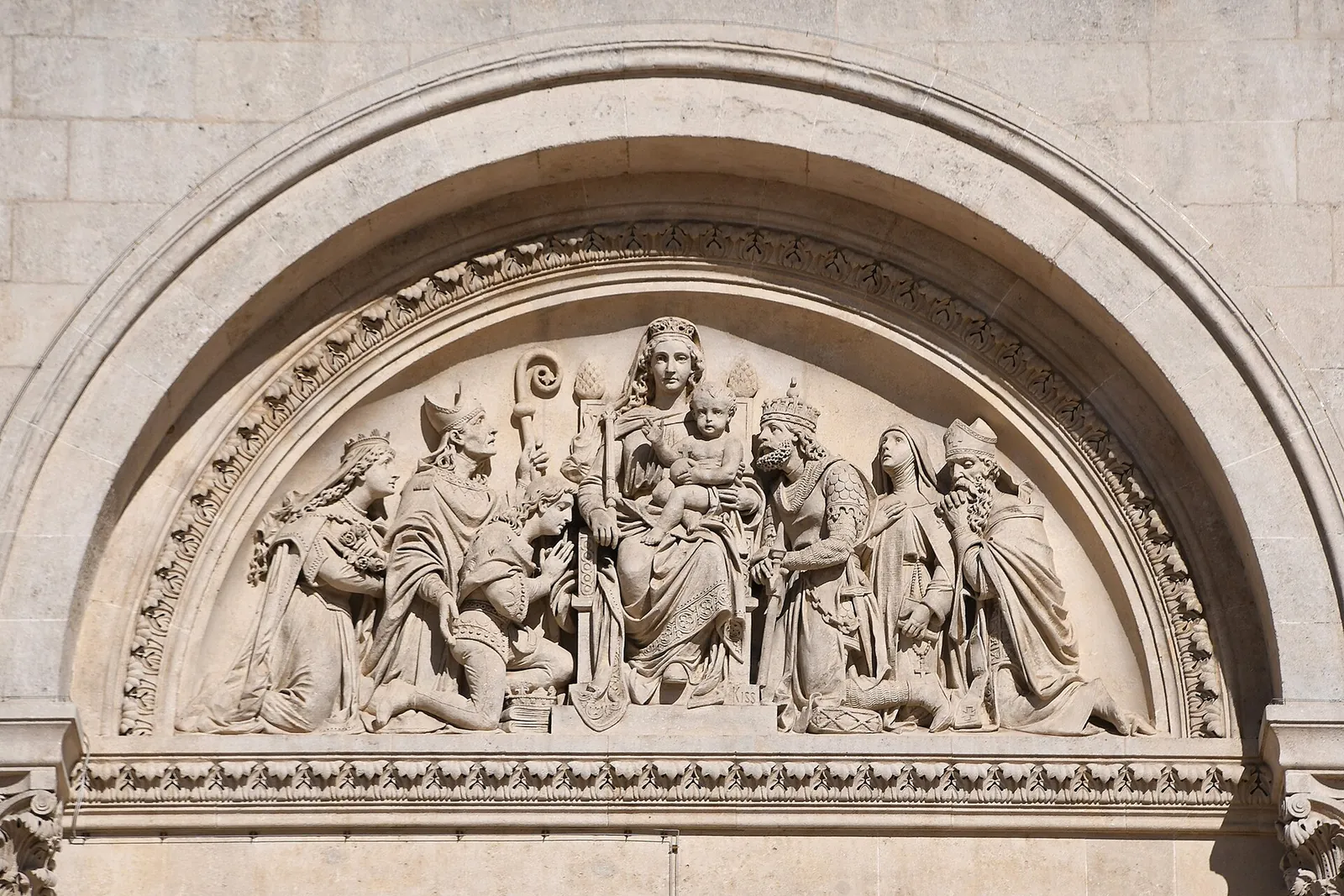
This is where Saint Stephen chose the seat of the bishopric he founded in 1009. A statue of Franz Liszt stands on the balcony of the Bishop's Palace. When the four-towered cathedral was consecrated in 1891, the Budapest papers wrote: "Whoever wants to see heaven should come to Pécs!" Inside plays an organ with 6101 pipes, and the remains of Janus Pannonius were reburied in the crypt. Your ticket also covers the tower, which gives you a view over the city.

Cella Septichora 9 min
Under Dóm tér lie 1600-year-old painted burial chambers: the Early Christian cemetery of Pécs has been a UNESCO World Heritage Site since 2000. More here: Cella Septichora and the Early Christian burial chambers.
Csontváry Museum 11 min
Paintings by Tivadar Csontváry Kosztka, including The Lonely Cedar and the huge Baalbek. A good plan for the afternoon, and it's close to Dóm tér.
Barbakán 14 min
The round gate fortress that stood out in front of the medieval town wall. At the end of the Barbakán garden stands a statue of Janus Pannonius.
Evening
Back to Király utca: our favourite places for the evening, a few steps from the building.
Day two: Zsolnay and the hill
Zsolnay Quarter 18 min
Spend the morning at the former porcelain factory: museums, eosin, a park. With a small detour you can take in the Kodály Centre too 16 min: it's the city's concert hall, home of the Pannon Philharmonic, and you can visit the foyer for free on weekdays. More here: Zsolnay Quarter.
Mosque of Pasha Yakovali Hassan 15 min
According to its operator, this is the only place in the country where a mosque and its minaret have survived together. The minaret is 23 metres tall.
Pécs Market Hall 18 min
In their own words, the largest market in the region. A good stop before lunch; check the opening hours on their website.
Tettye and the Mecsek 15 min
In the afternoon, head up the hill: Tettye park with the ruins of a Renaissance bishop's summer residence, and from there on to the church on Havi-hegy or all the way to the TV tower. Routes and buses: Mecsek: walks and easy hikes from the building.